The Psychology of Random Choice: Why We Love Leaving It to Fate

You have two options. Both are fine. But you still cannot pick one.
So what do you do? You flip a coin. Or you spin a wheel. And the moment the result appears, you feel something. Maybe relief. Maybe clarity. Maybe a small voice inside says, “Actually, I wanted the other one.”
That moment is not random at all. That moment is pure psychology.
This blog explores the psychology of random choice and why so many people, from kids to CEOs, end up trusting fate with their decisions. And yes, tools like the Yes or No Wheel are part of this story.
Why Making Decisions Feels So Hard
Here is something most people do not talk about. Choosing between two good things is harder than choosing between something good and something bad.
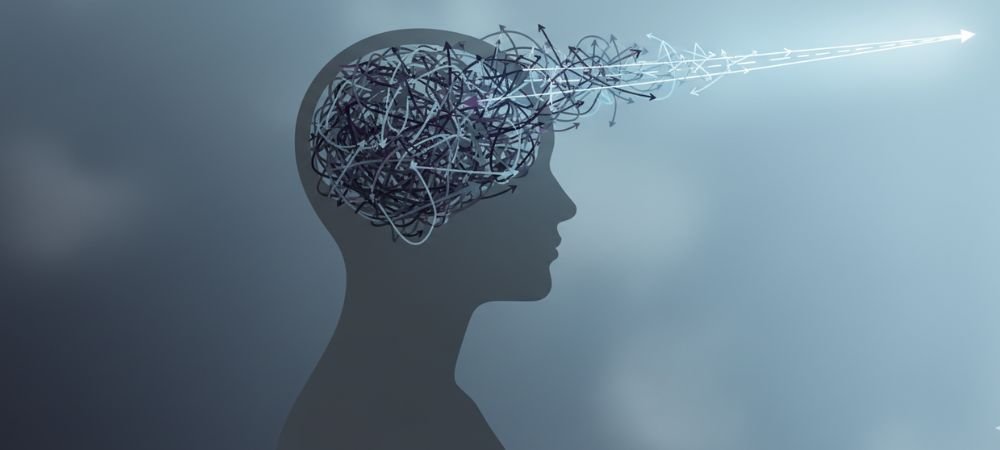
When both options are fine, your brain has no clear winner. It keeps going back and forth, burning energy, creating stress, and getting nowhere. Psychologists call this choice overload.
Barry Schwartz, a psychologist at Swarthmore College, wrote about this in his book The Paradox of Choice. The more options people have, the less happy they feel with their final pick. More choice does not equal more freedom. It often equals more anxiety.
Random choice fixes this. Not by finding the best option. But by ending the loop.
What the Brain Actually Does When You Leave It to Fate
Random decisions do not bypass your brain. They activate a very specific part of it.
When you spin a wheel or flip a coin, your brain is still watching. It is waiting to see how you react. That reaction, that gut feeling right after the result lands, is real information.
This is called the Blink Response, and it shows up in neuroscience research on fast thinking. Your emotional brain processes the result before your logical brain has time to argue.
So when someone says, “I spin a wheel when I cannot decide,” they are not being lazy. They are using a clever trick to hear what they actually want.
A tool like the Yes or No Wheel works exactly this way. You spin it for a binary decision, and the result forces a reaction. That reaction tells you more than five minutes of overthinking ever could.
The Real Reason People Love Randomness
Randomness removes blame. That is the honest truth.
When a decision goes wrong and a person made it themselves, they feel guilty. But when a wheel decided, or a coin landed, the emotional weight is lighter. It was fate. It was chance. It was not “my fault.”
This is not weakness. This is how human brains protect themselves from regret. Psychologists call it outcome devaluation. The brain cares less about bad results when it did not feel fully responsible for them.
That is a feature, not a bug. And it is one big reason why random decision tools have become so popular online.
When Random Choice Works Best for Decisions
Not every decision should be random. But a surprising number of daily ones should be.
Random choice works best when:
- Both options are equally good or equally unknown
- The decision is low stakes but still feels hard
- You keep going in circles and cannot stop overthinking
- You want to end an argument fairly and quickly
- You want to add fun or spontaneity to a choice
Think about what to eat for dinner. Most people spend more mental energy on this than on their weekly plans. A quick spin of a Yes or No Wheel ends the loop instantly.
Decision Fatigue Is Real and Randomness Solves It
Every decision you make uses mental energy. By afternoon, most people are running low.
Barack Obama famously said he wore the same style of clothing every day so he would not waste brainpower on small choices. Mark Zuckerberg does the same. This is not quirky. It is a smart response to decision fatigue.
When your decision energy is low, randomness is not a shortcut. It is a smart tool. It lets you preserve mental space for things that actually matter.
Read more about how randomness can improve your daily flow in our post on how to use randomness to boost your daily productivity.
The Science Behind Maybe: Embracing Uncertainty
Some decisions do not have a right answer. They never will. And the longer a person waits, the more uncertain the outcome becomes.
Research in behavioral economics shows that people hate uncertainty more than they hate bad outcomes. This is why people make rushed decisions just to feel settled, even when waiting would have been smarter.
Randomness creates a kind of peace with uncertainty. It says: this is not predictable, and that is fine.
This connects directly to the science behind the maybe and when to embrace uncertainty. Sometimes the best mental move is to accept you do not know, spin the wheel, and keep going.
Fate Feels Meaningful Even When It Is Not
Here is something fascinating. People assign meaning to random outcomes.
If a person asks whether they should take a new job and the wheel says yes, they do not just follow it blindly. They start looking for reasons why yes makes sense. They connect dots. They find logic that supports the random result.
This is called post hoc rationalization. The decision was made randomly. But the brain builds a story around it to make it feel intentional.
This is not dishonest. It is human. And it shows that random tools do not replace thinking. They start a new kind of thinking.
Yes or No Wheel and the Psychology of Binary Decisions
A Yes or No Wheel is a specific type of random tool designed for the simplest and often the hardest type of decision: yes or no.
Binary decisions feel easy on paper. They are not. When both answers carry weight, the brain freezes. The wheel does not freeze. It spins, it lands, it gives you an answer.
What makes this powerful is the emotional trigger it creates. People often know which answer they were secretly hoping for. The wheel just confirms it or forces them to confront the opposite.
For anyone wondering what this tool is and how it actually functions, check out What Is a Yes or No Wheel? How It Works and Best Use Cases.
Random Choice vs Other Decision Tools
People compare random tools all the time. Coin flip or wheel? App or real coin? Voice assistant or spinner?
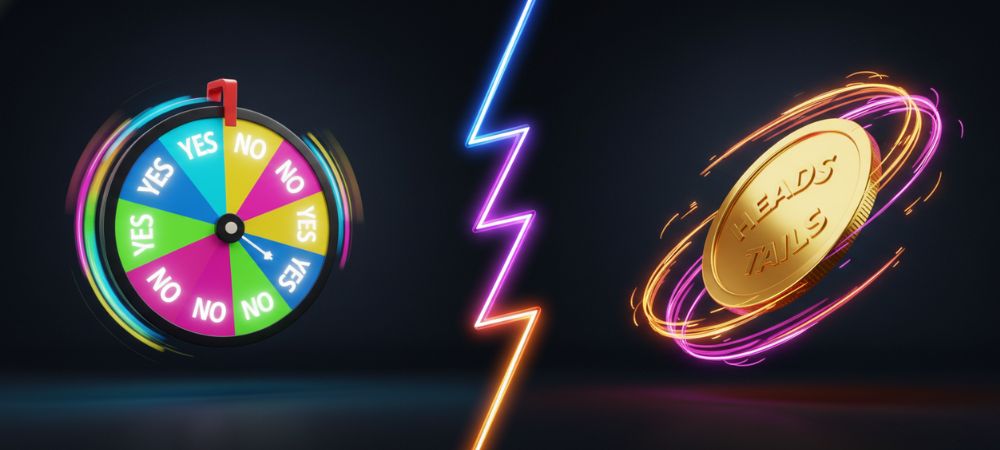
Each tool triggers slightly different psychological responses. A coin flip is fast and cold. A wheel spin has motion, which adds a feeling of drama and buildup. That anticipation is not nothing. It builds emotional engagement with the outcome.
There is a full breakdown of this in Yes or No Wheel vs Coin Flip: Which Is Better for Decisions? which looks at both tools from a practical and psychological angle.
Group Decisions and the Power of Shared Randomness
Random tools are especially powerful in groups. When two people cannot agree, arguing gets personal fast.
A wheel removes the ego from the equation. No one “won.” Fate decided. This is why spinning a wheel has become a popular party trick, a team activity, and a classroom tool.
For groups looking to add some fun to this, ten fun ways to use a Yes or No Wheel at your next party has practical and playful ideas for exactly that.
Is It Ever Bad to Leave Decisions to Fate?
Yes. Sometimes.
Random choice works for low to medium stakes decisions. It should not be used for medical choices, financial plans, relationship decisions, or anything where real research and thought are needed.
The key is knowing when randomness helps and when it hides a deeper problem. If someone uses a wheel to avoid thinking through every small choice, that is healthy efficiency. If someone uses it to dodge a hard conversation or an important responsibility, that is avoidance dressed as fate.
Use the tool. Do not let the tool use you.
An Opinion Worth Saying Out Loud
Most people think trusting fate is irrational. The data says otherwise.
When a person genuinely cannot tell which option is better, random choice is not lazy. It is actually the most efficient path forward. It does not add new information. But it removes the paralysis that no information creates.
The psychology of random choice is not about giving up control. It is about recognizing that sometimes the act of deciding matters more than which decision gets made. Getting unstuck is the win. Moving forward is the goal.
And if a spinning wheel gets you there? That is not weakness. That is wisdom with a little spin.
FAQs: What People Ask About the Psychology of Random Choice
Is making a random decision a sign of being indecisive?
Not at all. Using a random tool is often a sign that both options are equally good. When there is no clear winner, randomness is efficient. It ends the loop without wasting energy.
Why does flipping a coin or spinning a wheel feel satisfying?
Because it removes the weight of personal responsibility from the outcome. The brain relaxes when it does not feel fully accountable. That relaxation feels like relief.
Can a Yes or No Wheel really help with decisions?
Yes, especially for low stakes decisions where both options seem fine. It triggers an emotional reaction that often reveals what you actually want. Can a Yes or No Wheel Really Help You Make Decisions? explains this in more detail.
What is decision fatigue and how does randomness help?
Decision fatigue is the mental exhaustion that builds up after making many choices throughout the day. Randomness helps by reducing the number of decisions your brain has to fully process, saving mental energy for things that matter more.
Is it healthy to always leave decisions to fate?
For small, low stakes choices, yes. For big decisions involving health, finances, or relationships, no. Randomness is a tool, not a lifestyle. Use it where it helps. Think it through where it counts.
Why do people trust random outcomes even when they know it is just chance?
Because the brain is pattern seeking. Even after a random result, people look for meaning in it. This post hoc rationalization makes random outcomes feel significant, which helps people commit to a direction and move forward.
What is the psychology term for going in circles over a decision?
It is often called decision paralysis or analysis paralysis. It happens when too much information, or too much uncertainty, prevents a person from choosing. Random tools like spinning a wheel break the cycle by forcing a result.