How to Settle Any Argument Over What to Eat for Dinner
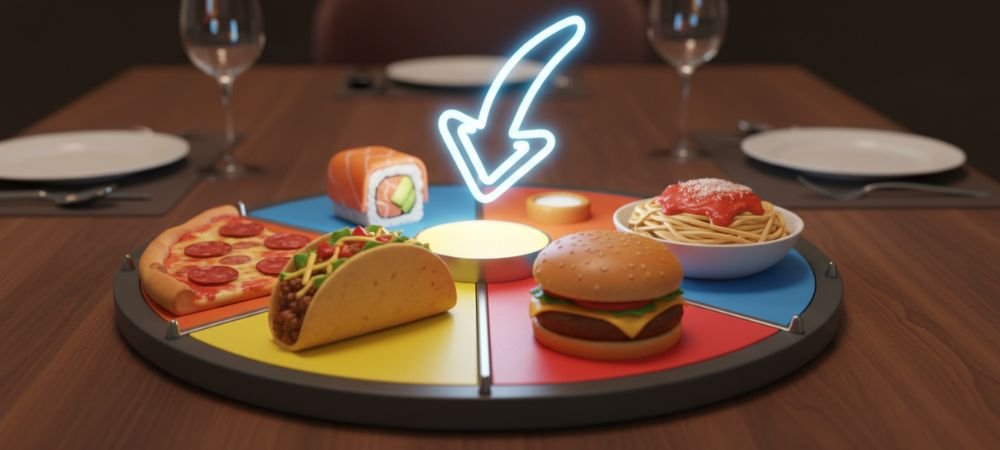
Nobody wants to fight about food. But here you are, again, stuck in the “I don’t know, what do you want?” loop that somehow lasts 45 minutes and ends with everyone annoyed, hungry, and eating toast.
The dinner debate is real. It is petty. And it costs more time than most people realize.
The fastest fix? Stop asking open-ended questions and start using a simple decision tool — like a yes or no wheel — to cut through the back-and-forth instantly.
But there is more to it than just spinning a wheel. This guide covers every practical way to end the dinner argument, tonight and every night after.
Why the Dinner Argument Never Ends
The problem is not that people are picky. The problem is that open-ended questions create endless loops.
“What do you want to eat?” has no clear answer. It requires both people to narrow down thousands of options, match preferences, think about budget, check what is in the fridge, and somehow agree — all at once, while hungry.
Hunger makes decisions harder. Research on decision fatigue shows that the brain gets tired of choosing things by evening. By dinner time, most people are running on empty mentally, not just physically. That is why the fight starts small and grows fast.
The dinner argument is not about food. It is about decision fatigue hitting two people at the same time.
The Fastest Way to Settle a Dinner Argument Right Now
Here is the method that works every single time.
Write down five dinner options. Each person picks what they actually want. Toss them into a list. Spin a yes or no wheel for each one.
Keep spinning until something lands on yes. That is dinner.
Nobody gets blamed. Nobody made the “wrong” choice. The wheel decided. People accept random outcomes far more peacefully than they accept being overruled by another person. That is just human nature.
Use a Yes or No Wheel Instead of Arguing
The yes or no wheel is not just a fun toy. It is a real tool for breaking deadlocks.
Here is how it works for dinner decisions:
Step 1: Each person names two or three dinner ideas. No arguing yet.
Step 2: Go through each option with the wheel. Spin it. Yes or no.
Step 3: The first option that lands on yes wins. Everyone agreed to the process, so everyone accepts the result.
This sounds almost too simple. But it works because it removes personal blame from the decision. The wheel said pizza. Not your partner. Not you. The wheel.
Set a Dinner Night Rotation System
One of the smartest long-term fixes is to stop making dinner a daily negotiation.
Assign nights. Monday is Person A’s pick. Tuesday is Person B’s pick. Wednesday is random (use the wheel). And so on.
This kills the argument before it even starts. There is nothing to debate when the system already decided whose turn it is.
Couples who do this report that it actually brings more variety to their meals too. When one person picks every Monday, they start experimenting more than they would in a joint negotiation.
The "Two Veto" Rule for Picky Eaters
Some households have a picky eater. That is fine. The “two veto” rule handles this without making every meal a battle.
Each person gets two veto cards per week. If something is genuinely awful to them, they play a veto. No explanation needed. No debate.
But once those two vetoes are gone, they are gone. Every other suggestion that week gets a fair chance.
This gives picky eaters real power without letting them control every meal. It also naturally encourages people to save their vetoes for things they truly cannot stand, rather than just things they mildly dislike.
Why Random Choice Actually Feels Fair
There is real psychology behind random choice. People accept random outcomes as fair because the process has no bias. No one is favored. The outcome is purely chance.
When a person makes the call, the other person may feel overruled or ignored. When a wheel makes the call, both people feel like equal participants in a fair process.
That is why using a yes or no wheel for decisions works so well in households. It removes emotion from a moment when emotions are already running high.
Build a "Dinner Shortlist" and Keep It Somewhere Visible
A shared list of 15 to 20 meals that everyone in the house already likes is one of the most underused tools in the kitchen.
Put it on the fridge. Or a shared note on a phone. When the dinner argument starts, just pull out the list. Spin a wheel. Done.
The list removes the brain tax of generating options from scratch every single night. And since every meal on the list is already approved by everyone, there is no real reason to fight about it.
Update the list every month or so. Add new things. Remove meals nobody has made in three months. Keep it fresh.
Use a Decision-Making App or Wheel Tool
There are actual tools built for exactly this problem. A yes or no wheel is the simplest and most satisfying to use. Spin it, get an answer, move on.
Other online decision-making tools like custom spin wheels let people add specific meal options and spin for a winner. These are great for families who want more than a binary yes or no.
Want to compare options? Check out yes or no wheel vs coin flip to see which method works better for household decisions.
Try a "Theme Night" Calendar to End Debates Forever
Theme nights remove the daily decision entirely.
Monday: pasta. Tuesday: tacos. Wednesday: something new. Thursday: leftovers. Friday: takeout. Saturday: grill night. Sunday: soup or slow cooker.
Nobody argues about what taco to make on a Tuesday. They just make tacos. The theme already answered the question.
This approach is especially powerful for families with kids, since children respond very well to routine. Knowing what to expect reduces mealtime friction across the board.
When the Real Fight Is Not About Food
Sometimes the dinner debate is a surface-level fight about something deeper. One person feels like they always decide. The other feels like their suggestions always get shot down. Or someone is exhausted and does not want to carry the mental load of yet another choice.
If dinner arguments happen every single night and always end in frustration, it might be worth looking at how decisions get made in the household in general.
Using randomness to boost daily productivity is one approach. Offloading small choices to tools and systems frees up real mental energy for the things that actually matter.
Make Dinner Decisions Fun with a Spin Game
This is optional but underrated. Turn the dinner choice into a tiny event.
Each person writes their top choice on a slip of paper. Fold them up. Spin the yes or no wheel once for each slip. First yes wins.
Kids love this. Even adults find it weirdly satisfying. The ritual of spinning and waiting and revealing creates a little moment of shared fun out of something that used to cause stress.
It also works great at parties and group dinners. Check out fun ways to use a yes or no wheel at a party for more ideas on how to use it socially.
The "Maybe" Option Is Allowed
Not every dinner decision needs to be a hard yes or no. Sometimes the answer is “maybe, if someone else does the cooking.” Or “maybe, if we can make it simpler tonight.”
Embracing uncertainty in small decisions is actually a smart habit.
External Resources Worth Checking
For people interested in the actual science of decision fatigue and how it affects choices later in the day, the American Psychological Association has solid research-backed resources on decision making under stress.
For understanding how random chance affects human perception of fairness, Psychology Today covers the topic clearly and without heavy jargon.
Quick Summary: How to Stop Fighting About Dinner
- Use a yes or no wheel to pick between options without blame
- Set a rotation so each person has assigned nights
- Give each person two veto cards per week
- Keep a shortlist of approved meals on the fridge
- Use theme nights to kill the daily decision entirely
- Treat the decision as a fun spin game instead of a negotiation
The dinner argument is solvable. It just takes removing the ego from the equation. And that is exactly what a good decision tool does.
Frequently Asked Questions
What is the best way to decide what to eat for dinner?
The best way is to reduce the options first, then use a neutral tool like a yes or no wheel to pick between them. Fewer choices plus a fair process equals faster decisions with no hard feelings.
How do couples stop fighting about food?
Set up a system where each person has assigned nights or a fixed shortlist of meals everyone likes. Using a spin wheel for nights when nobody wants to decide also removes personal blame from the outcome.
Is it normal to argue about what to eat every night?
Very normal. It happens because dinner falls at the exact time when decision fatigue peaks. Both people are mentally tired from a full day and have little energy left for yet another choice.
Can a yes or no wheel help with dinner decisions?
Yes. A yes or no wheel is great for yes or no decisions like “should we get pizza tonight?” or for cycling through a list of meal options one by one until something lands on yes.
How do I get a picky eater to agree on dinner?
Use the two veto rule. Give them a limited number of vetoes per week so they feel heard without having full control. Pair this with a shortlist of meals they already like as a starting point.
What is decision fatigue and how does it affect dinner?
Decision fatigue is when the brain gets tired of making choices after a long day. By dinnertime, most people have already made hundreds of small decisions and have very little mental energy left. That is why even a simple dinner choice can turn into an argument.
What is the fastest way to pick what to eat tonight?
Write down three options. Spin a yes or no wheel for each one. Eat the first one that lands on yes. Total time: under two minutes.