The Science Behind the Maybe: When to Embrace Uncertainty

The Answer Nobody Wants to Hear
There is no answer yet. That is actually fine.
Most people treat uncertainty like a problem that needs fixing right now. They stay up late. They make lists. They ask every person they trust. All because the brain is wired to hate not knowing.
But here is the truth that science backs up: sometimes “maybe” is not a failure to decide. It is the smartest place to sit. And understanding why your brain panics at uncertainty is the first step to making better choices when you do not have all the answers.
If you have ever used a Yes or No Wheel to make a quick decision, you have already experienced a small version of surrendering control. And it probably felt oddly good. That feeling has a name in neuroscience.
What the Brain Actually Does With Uncertainty
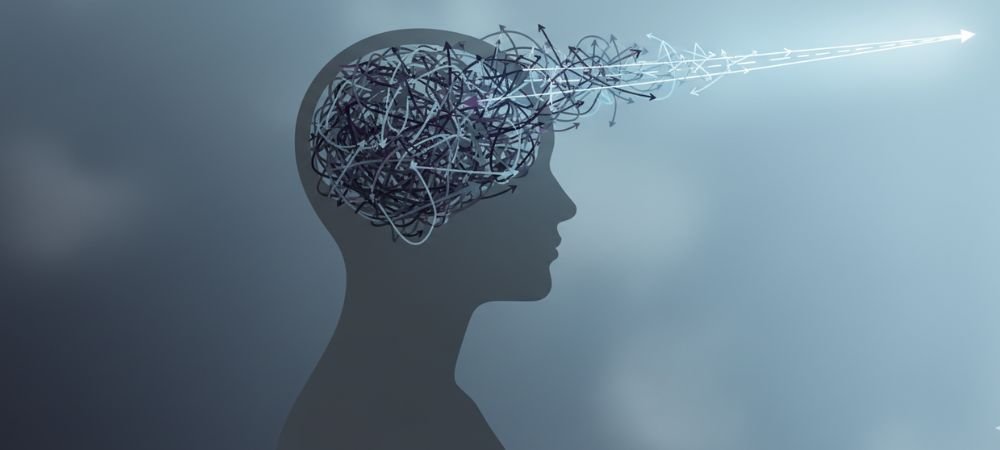
The human brain runs on prediction. Every second, it is guessing what comes next, what is safe, what is a threat. When something unknown appears, the brain registers it the same way it registers pain.
A 2016 study published in Nature Communications found that people felt more stressed when they knew there was a 50% chance of an electric shock than when they knew the shock was definitely coming. The uncertainty itself was worse than the bad outcome.
Read that again. Not knowing was more painful than the painful thing.
This is called intolerance of ambiguity. It is the technical term for why people make rushed decisions just to escape the uncomfortable feeling of not knowing. They would rather pick wrong fast than sit with “maybe” for one more minute.
Why Uncertainty Is Not the Same as Being Lost
There is a big difference between being confused and being in a productive unknown. Science actually has a word for the second type.
Psychologists call it epistemic curiosity. It is the mental state where you know you do not have the full answer yet, but you are actively seeking it rather than panicking about it. People with high epistemic curiosity make far better long term decisions because they do not rush the process.
The best doctors, investors, and problem solvers on earth are not people who always know the answer. They are people who are comfortable holding the question longer than everyone else.
This connects directly to decision fatigue. When you force every decision to a hard yes or no before it is ready, you exhaust your brain. You start making worse choices later in the day simply because you burned out the part of your mind that handles judgment.
The Science Behind Tolerating a Maybe
Tolerance for ambiguity is a measurable psychological trait. Researchers study it the same way they study emotional intelligence. And just like emotional intelligence, it can be trained.
Studies in organizational psychology show that people who score high in ambiguity tolerance are better at creative problem solving, more resilient in unpredictable environments, and report higher overall life satisfaction. They do not need every box checked before they feel okay.
The brain region involved here is the prefrontal cortex, specifically the parts that regulate emotional responses and long term planning. When you practice sitting with uncertainty, you are literally strengthening this region. You are training your mind to separate “I don’t know yet” from “something is wrong.”
This is exactly why tools like random decision spinners work so well for low stakes choices. When you use a random choice tool and let it decide for you, you are briefly handing the wheel to chance. And the moment you see the result, your gut tells you if it feels right or not. That reaction is information. Pure, unfiltered data about what you actually wanted.
When Embracing Uncertainty Is the Right Move
Not every situation calls for a quick answer. Some decisions genuinely need more time. Here is how to tell the difference.
When the information is still coming in
If you are waiting on test results, a response from someone, or data from a project, making a decision before that arrives is just guessing with extra steps. The uncertainty here is doing something useful. It is holding space for better information.
When the stakes are high and reversible
Big decisions that can be changed later, like trying a new habit, taking on a new project, or picking where to eat tonight, do not need certainty before you act. In fact, leaving it to chance for smaller daily choices frees up mental energy for the things that actually matter.
When you are overthinking something with no clear answer
Some choices do not have a right answer. They have a chosen answer. Should you take job A or job B? Both have tradeoffs. No amount of extra research will eliminate that. At some point, you have to act on incomplete information. Sitting in uncertainty here is not wise. It is just delay.
This is where a random spinner becomes a tool for self discovery, not just randomness. Try this: if you use a Yes or No Wheel and you feel relief when it lands on yes, you already had your answer. The tool just made it visible.
The Productivity Angle Nobody Talks About
There is a direct connection between accepting uncertainty and getting more done each day. When you stop demanding certainty before you act, you start moving faster. You stop waiting for perfect conditions and start working with what is available.
This is not recklessness. It is what researchers call adaptive decision making. It is the strategy of taking the best action possible with current knowledge, then adjusting as new information comes in. Military planners, emergency doctors, and startup founders all use this approach.
If you want to apply this in daily life, read more about using randomness to boost daily productivity. The connection between accepting not knowing and doing more with your day is real and backed by research.
What Good Decision Makers Do Differently With Uncertainty
Research on expert decision makers, from chess grandmasters to emergency dispatchers, shows one consistent trait. They do not try to eliminate uncertainty. They get comfortable enough with it to act anyway.
Here is what that looks like in practice:
They separate what they know from what they do not. Rather than treating everything as unknown, they sort it. “I know these three things for certain. I do not know these two things yet. I can act on what I have.”
They set a decision deadline. Uncertainty does not expire on its own. At some point you have to close the loop. Good decision makers give themselves a time limit. After that, they act on their best current judgment.
They use low stakes decisions to practice. Small daily choices, what to eat, what route to take, what to watch tonight, are practice runs for tolerating uncertainty. Every time you make a choice without full certainty and it works out fine, your brain learns that unknown is not always unsafe.
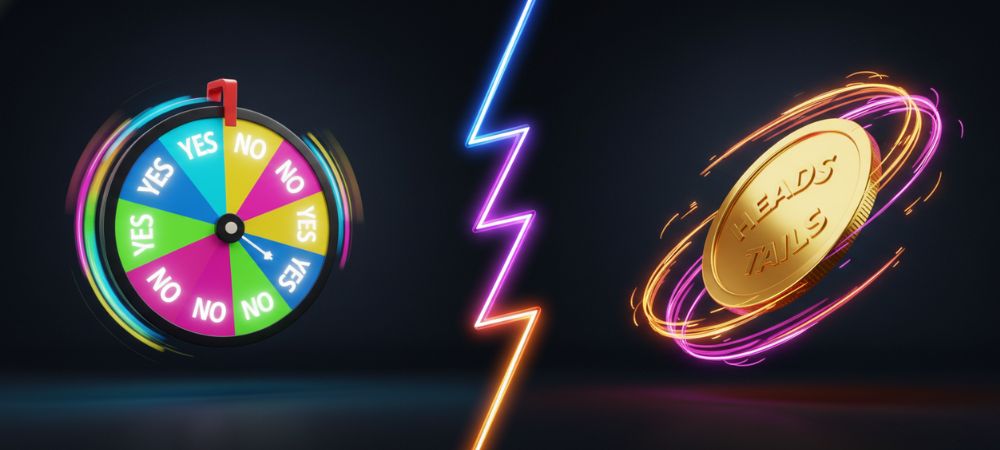
A Yes or No Wheel vs a coin flip debate comes down to exactly this. Both are tools for practicing low stakes acceptance of the unknown. Neither replaces judgment. Both train the part of your brain that tolerates ambiguity.
The Maybe Is Sometimes the Most Honest Answer
Culture teaches people to admire decisive people. Leaders who never waver. Experts who always have an answer. But in reality, the most trustworthy people in any field are the ones who say “I don’t know yet” when they genuinely don’t.
A doctor who says “let’s wait for more results” is not being weak. A manager who says “I need a day to think” is not being indecisive. They are being accurate. And accuracy in decision making beats speed every time when the consequences are serious.
The science is clear on this. Premature closure, that is the term for forcing a decision before it is ready, is one of the top causes of diagnostic errors in medicine, strategic miscalculations in business, and avoidable mistakes in everyday life.
The maybe is not a failure state. It is a holding pattern. And sometimes the holding pattern is exactly where you need to be.
How to Get More Comfortable With Not Knowing
This is trainable. Here are real techniques backed by behavioral research.
Name the uncertainty out loud
Say it directly. “I do not know yet.” This reduces the emotional weight. Naming something activates the prefrontal cortex and calms the emotional response. It is a small act with a measurable effect.
Give yourself a clear time window
Instead of sitting in open ended uncertainty, set a window. “By Friday I will decide.” This turns an abstract discomfort into a bounded problem. Your brain handles bounded problems much better.
Use random tools for small decisions
Free up decision energy by handing off low stakes choices. A Yes or No Wheel for daily decisions or a simple coin flip removes the cognitive load of hundreds of small daily choices. That saved energy goes toward the decisions that actually need careful thought.
Track small wins in uncertainty
Keep a log of times you acted without full certainty and it worked out. The brain overweights bad outcomes from uncertain situations and ignores the good ones. A simple written record rebalances this over time.
What Research Says (External References)
The stress and uncertainty study referenced above is from research published in Nature Communications. It is one of the most cited pieces of work on why humans experience uncertainty as a threat.
For a broader look at ambiguity tolerance as a psychological trait, the American Psychological Association has a range of accessible research summaries on decision making and uncertainty tolerance.
A Practical Example: Even Dinner Decisions Count
Here is a small but real case. The group chat is spiraling. Nobody can decide where to eat. Somebody suggests everything. Nobody agrees on anything. Twenty minutes gone. This is uncertainty turned into group friction. The fix is embarrassingly simple: settle the dinner debate with a random spinner. Hand off a genuinely low stakes decision to a tool. Reserve your collective judgment for something worth it.
Uncertainty Can Be Fun Too
Not all uncertainty is heavy. There is a whole category of fun decisions where letting go of control makes things better, not worse. Game nights, party choices, random challenges. Fun ways to use a Yes or No Wheel at a party are a perfect example of using randomness as entertainment rather than a problem to solve. The science here is simple: playful uncertainty builds social bonds and reduces social anxiety.
FAQs: The Science Behind Uncertainty and Decisions
Is it normal to feel anxious when you don’t know the answer?
Yes, completely normal. The brain treats uncertainty the same as a threat. It triggers a stress response even when no real danger exists. This is an evolutionary pattern, not a personal weakness.
Does embracing uncertainty mean ignoring risk?
Not at all. Embracing uncertainty means acknowledging what you do not know while still taking informed action. Risk awareness and uncertainty tolerance work together, not against each other.
Can you actually train yourself to be more comfortable with uncertainty?
Yes. Research in cognitive behavioral therapy and mindfulness shows clear evidence that ambiguity tolerance improves with deliberate practice. Small daily actions, like making minor choices without overthinking, build this over time.
Why do some people handle uncertainty better than others?
Personality traits, early life experiences, and past outcomes all play a role. People who had safe environments to take small risks as children tend to develop higher ambiguity tolerance naturally. But it is trainable at any age.
Is using a random decision tool like a Yes or No Wheel a sign of poor judgment?
No. Using random tools for low stakes decisions is a smart cognitive strategy. It prevents decision fatigue and frees up mental energy for choices that genuinely need careful thought.
What is the difference between a maybe and procrastination?
A maybe with a decision deadline is a smart pause. A maybe with no end point is procrastination. The difference is whether the uncertainty is doing useful work or just delaying the inevitable.
Does uncertainty affect creativity?
Yes, positively. Research in cognitive science shows that people in uncertain or ambiguous situations often produce more creative solutions. The brain works harder when it does not have a ready made answer to fall back on.